The Stoic Mind: Ancient Philosophy Through the Lens of Modern Neuroscience
A
Andre Sarr
·14 min read
"You have power over your mind — not outside events. Realize this, and you will find strength."
— Marcus Aurelius, Meditations
Abstract
Stoicism, a philosophical tradition founded in ancient Athens around 300 BCE, is increasingly recognized as a sophisticated cognitive system with deep parallels to contemporary cognitive neuroscience and psychotherapy. This article synthesizes evidence from neuroscience, clinical psychology, and philosophy to argue that Stoic practices - particularly cognitive reappraisal, voluntary attention control, and the dichotomy of control — map onto measurable neural mechanisms, most notably prefrontal cortex modulation of amygdala reactivity. We further trace the direct intellectual lineage from Stoic philosophers to the founding of Cognitive Behavioral Therapy (CBT), and review the emerging empirical literature validating Stoic training as an intervention for well-being. We conclude that the Stoic mind is not merely a metaphor, but a neurobiologically grounded model of adaptive cognition.
For over two millennia, Stoic philosophy has offered a systematic account of how the human mind can achieve equanimity in the face of suffering, loss, and uncertainty. From the writings of Epictetus and Marcus Aurelius to the letters of Seneca, the Stoics developed detailed cognitive practices — what they called askesis (training) — aimed at restructuring the mind's relationship to events.
What was once regarded as mere philosophy has now attracted serious scientific attention. A growing body of research demonstrates that Stoic cognitive strategies engage the same neural circuits targeted by evidence-based psychological therapies. The prefrontal cortex, which governs deliberate reasoning and emotional regulation, appears to be the biological seat of what the Stoics called the hegemonikon — the rational governing faculty of the mind.
Bust of Marcus Aurelius, Roman Emperor and Stoic philosopherFigure 1. Marcus Aurelius (121–180 CE), Roman Emperor and author of the Meditations — a cornerstone text of applied Stoicism.
This review integrates philosophical analysis with neuroimaging data, clinical psychology, and emerging empirical research to present a unified account of the Stoic mind as a scientifically coherent framework.
2. Historical Foundations of Stoicism
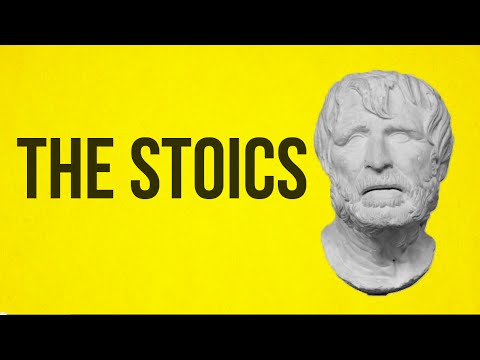
Stoicism was founded by Zeno of Citium around 300 BCE in Athens, where he lectured at the Stoa Poikile (Painted Porch) — from which the philosophy takes its name. Its core doctrine held that virtue (arete) is the only true good, that external events are indifferent (adiaphora), and that human freedom lies entirely in our internal responses.
The Stoa Poikile in ancient AthensFigure 2. The Athenian Agora, where Zeno taught. The Stoa Poikile stood at its northern edge.
The school produced three foundational thinkers whose works remain scientifically relevant:
Philosopher
Period
Key Contribution
Epictetus
c. 50–135 CE
The Enchiridion; Dichotomy of Control
Marcus Aurelius
121–180 CE
Meditations; Applied introspective practice
Seneca the Younger
c. 4 BCE–65 CE
Letters on therapeutic philosophy
Central to all three is the concept of the dichotomy of control: the Stoic claim that only our own judgments, desires, and intentions are "up to us" (eph' hēmin), while external events — illness, reputation, death — are not. This is not merely a moral claim; as we shall see, it is a testable cognitive strategy with demonstrable neural effects.
3. The Neuroscience of Stoic Emotion Regulation
3.1 The Prefrontal Cortex as the Seat of Rational Governance
Modern neuroscience has mapped emotion regulation onto a well-characterized brain circuit. The amygdala, a subcortical structure in the medial temporal lobe, serves as the brain's threat-detection system, rapidly generating fear and arousal responses. The prefrontal cortex (PFC), particularly its ventrolateral and dorsomedial regions, exerts top-down inhibitory control over amygdala reactivity.
Brain diagram showing prefrontal cortex and amygdala interactionFigure 3. Simplified lateral view of the brain. The prefrontal cortex (front) exerts regulatory control over subcortical structures including the amygdala (medial temporal lobe).
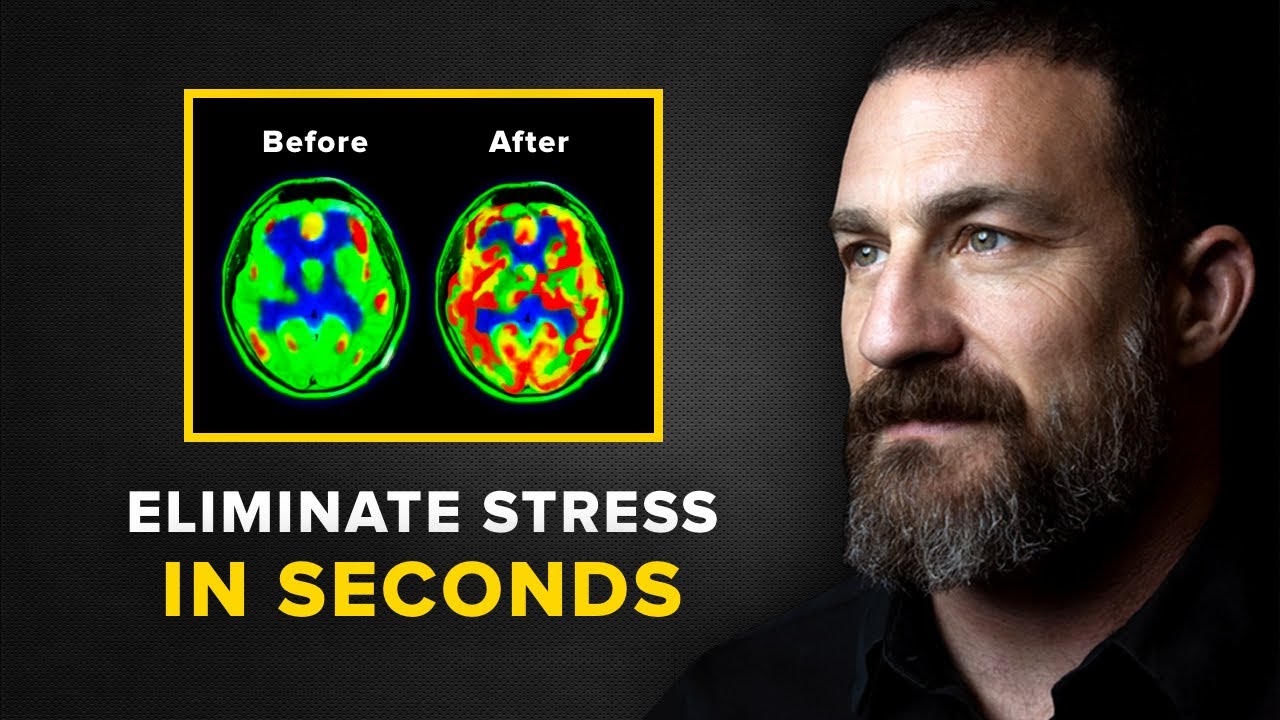
Meta-analyses of functional neuroimaging studies have found that cognitive reappraisal — the deliberate reinterpretation of an emotional situation — consistently activates the ventrolateral PFC and simultaneously reduces amygdala BOLD signal. This is precisely the mechanism the Stoics described: not the suppression of emotion, but the rational re-evaluation of circumstances.
"It is not things that disturb us, but our judgments about things."
— Epictetus, Enchiridion, §5
3.2 The Neural Stoic Loop
The following schematic summarizes the proposed neural pathway underlying Stoic cognitive practice:
The Stoic term apatheia — often mistranslated as "apathy" — actually denotes a state of freedom from destructive passions, achieved through reasoned engagement, not detachment. This maps precisely onto cognitive reappraisal rather than emotional suppression, which has been shown to have adverse long-term effects.
3.3 Animated Overview: How the Brain Regulates Emotion
The gif below illustrates the dynamic interplay between bottom-up emotional processing (amygdala-driven) and top-down cognitive control (PFC-driven):
Animated brain activity during emotion regulationFigure 4. Conceptual animation: neuronal activity patterns associated with cognitive regulation of emotional responses.
4. The Stoic–CBT Connection
Perhaps the most scientifically important legacy of Stoicism is its direct intellectual influence on Cognitive Behavioral Therapy (CBT), the most empirically validated form of psychotherapy in modern medicine.
4.1 Albert Ellis and the Stoic Blueprint
Albert Ellis (1913–2007), founder of Rational Emotive Behavior Therapy (REBT) — the first form of cognitive psychotherapy — explicitly modeled his treatment framework on Stoic philosophy. The core of REBT, the ABC model (Activating event → Belief → Consequence), directly echoes Epictetus's insight that it is not events themselves but our beliefs about events that cause psychological disturbance.
Ellis drew heavily from the Enchiridion:
"Men are disturbed not by the things which happen, but by the opinions about the things."
— Epictetus, Enchiridion, §5 (This passage was quoted by Ellis as the philosophical foundation of REBT)
4.2 Aaron Beck and Cognitive Distortions
Aaron Beck (1921–2021), who developed CBT in the 1960s, acknowledged the Stoic lineage of cognitive therapy. Beck identified cognitive distortions — systematic errors in reasoning that drive depression and anxiety — including catastrophizing, overgeneralization, and all-or-nothing thinking. The Stoic practice of identifying false judgments (phantasiai) about events is conceptually identical.
As Beck stated: "The philosophical origins of cognitive therapy can be traced back to the Stoic philosophers."
5. Core Stoic Practices and Their Neural Correlates
5.1 The Dichotomy of Control (Eph' hēmin)
The Stoics divided all things into those up to us (opinions, desires, actions) and those not up to us (health, wealth, reputation, external events). This cognitive schema trains the prefrontal cortex to selectively attend to controllable variables, reducing the amygdala's threat response to uncontrollable ones.
Neural correlate: Selective attention modulation via dorsolateral PFC; reduced threat appraisal for stimuli classified as outside one's control.
5.2 Negative Visualization (Premeditatio Malorum)
The practice of deliberately imagining potential losses or adversities — not as catastrophizing, but as immunization. Seneca wrote: "Let us prepare our minds as if we had come to the very end of life. Let us postpone nothing."
Neural correlate: Habituation of amygdala response to anticipated threats; reduced novelty-driven fear via repeated simulation in the hippocampus-PFC circuit.
Meditative thought visualization conceptFigure 5. Deep contemplative practice parallels the Stoic exercise of premeditatio malorum.
5.3 The View from Above (Hypsos)
Stoics practiced imagining themselves from a great distance — cosmically, historically — to reduce the apparent importance of personal tribulations. Modern cognitive science recognizes this as psychological distancing, which reduces emotional reactivity by shifting perspective-taking networks in the temporoparietal junction (TPJ).
5.4 Voluntary Discomfort (Askesis)
Epictetus and others advocated deliberate exposure to mild hardship — cold, hunger, simplicity — to train resilience. This is functionally equivalent to exposure therapy in modern CBT, which systematically desensitizes the amygdala by pairing feared stimuli with non-threatening outcomes.
5.5 Journaling (Commentarii)
Marcus Aurelius's Meditations were personal journal entries, never intended for publication. Modern research confirms that expressive writing reduces rumination, consolidates learning, and reduces amygdala reactivity to autobiographical negative memories.
Until recently, the scientific study of Stoicism lagged behind philosophical interest. The past five years have seen a meaningful expansion of empirical work.
6.1 Key Published Studies
Study
Finding
MacLellan & Derakshan (2021) — Cognitive Therapy and Research
Stoic training reduced emotional vulnerability in high-worry populations; synergistic effects with working memory training
Brown et al. (2022) — BMC Medical Education
Stoic training developed measurable empathy and resilience in medical students
Garcia (2024) — Journal of Critical Care
Stoicism shown to reduce burnout risk in intensive care clinicians
LeBon et al. (2025) — Cognitive Therapy and Research
Validation of the first psychometrically robust scale for measuring Stoic attitudes and behaviors (SABS)
Frontiers in Psychology (2025)
Stoic free will and self-regulation shown to align with empirical accounts of diachronic PFC-driven volitional control
6.2 Stoicism vs. "Stiff Upper Lip"
A critical scientific distinction separates authentic Stoic practice from emotional suppression ("stiff upper lip"). Research shows:
Cognitive reappraisal (Stoic strategy) → Decreased arousal, improved well-being, PFC activation
GIF comparing suppression vs reappraisal emotion regulation strategiesFigure 6. Emotional regulation is not about suppression — the Stoic model involves active cognitive reinterpretation.
7. The Stoic Attitudes and Behaviours Scale (SABS)
In 2025, LeBon, Brown, DiGiuseppe, Karl, Fischer, and Lopez published the first validated psychometric instrument for measuring authentic Stoicism: the Stoic Attitudes and Behaviours Scale (SABS). This scale identifies seven key dimensions of Stoic practice:
Cognitive reappraisal — Reinterpreting events to reduce negative impact
Acceptance of the uncontrollable — Distinguishing what is and isn't eph' hēmin
Present-moment awareness — Attention to current experience without rumination
Virtue orientation — Prioritizing character over external outcomes
Emotional equanimity — Stable affect in the face of adversity
Prosocial concern — Recognition of cosmopolitan duty to others
The SABS finding challenges the popular caricature of Stoicism as cold detachment, demonstrating instead that authentic Stoic attitudes positively predict psychological well-being, while mere emotional suppression does not.
8. Clinical Applications
8.1 Depression and Anxiety
Stoic-informed CBT targeting cognitive distortions is a first-line evidence-based treatment for major depressive disorder and generalized anxiety disorder. The Stoic framework offers cultural accessibility for populations who find Buddhist-derived mindfulness practices less congruent.
8.2 Medical Professional Burnout
Garcia (2024) documented that Stoic philosophical practice — particularly the distinction between what one can and cannot control in high-stakes medical environments — significantly reduced burnout risk among ICU clinicians.
8.3 Trauma and PTSD
Recent neurobiological work suggests that Stoic reappraisal training could complement exposure-based trauma therapies by strengthening PFC regulatory circuits. However, researchers caution that Stoic acceptance should never be conflated with minimizing trauma or dismissing distress.
The scientific rehabilitation of Stoicism is not without legitimate critique.
9.1 Risk of toxic stoicism: Unreflective promotion of "stoic toughness" can pathologize normal emotional responses and discourage help-seeking. The SABS data explicitly differentiates healthy Stoic acceptance from maladaptive suppression.
9.2 Cultural specificity: Stoic philosophy emerged from a Greco-Roman slave-owning aristocratic context. Its emphasis on individual internal control may be less applicable to individuals facing systemic injustice, where external advocacy is adaptive, not irrational.
9.3 Measurement challenges: Until the SABS (2025), no validated tool existed to measure authentic Stoic practice, limiting comparability across studies.
9.4 Sample limitations: Most Stoic training studies use WEIRD populations (Western, Educated, Industrialized, Rich, Democratic). Broader cultural validation is needed.
10. Conclusion
The Stoic mind is not a relic. Across more than two thousand years, from Zeno's Stoa to the neuroimaging laboratories of the 21st century, a remarkably coherent picture has emerged: the rational governance of emotion through deliberate cognitive practice is not only possible, but measurable, teachable, and clinically valuable.
The core Stoic insight — "It is not things that disturb us, but our judgments about things" — has been validated by fMRI studies showing PFC suppression of amygdala reactivity during cognitive reappraisal, by the intellectual genealogy of CBT from Epictetus through Ellis and Beck, and by the first wave of randomized trials demonstrating Stoic training's positive effects on well-being and resilience.
What emerges is a synthesis: the ancient philosophers were, in a meaningful sense, practicing empirical neuroscience without the instruments. They mapped, through introspection and rigorous self-experimentation, the same cognitive architecture that modern brain science has now illuminated with fMRI, EEG, and psychometrics.
The Stoic mind is, in the end, a trained mind — one that has learned to place the prefrontal cortex in productive dialogue with the amygdala, to distinguish the controllable from the uncontrollable, and to find in that distinction not resignation, but freedom.
"The impediment to action advances action. What stands in the way becomes the way."
— Marcus Aurelius, Meditations IV.49
11. References
Epictetus (c. 125 CE). Enchiridion (Discourses). Trans. G. Long.
Marcus Aurelius (c. 167–180 CE). Meditations. Trans. G.M.A. Grube.
Seneca the Younger (c. 65 CE). Letters to Lucilius. Trans. R.M. Gummere.
Ellis, A. (1957). Rational Emotive Behavior Therapy. Journal of Counseling Psychology, 3(1).
Beck, A.T. (1972). Depression: Causes and Treatment. University of Pennsylvania Press.
Robertson, D.J. (2010). The Philosophy of Cognitive-Behavioural Therapy. Karnac Books.
MacLellan, A., & Derakshan, N. (2021). The Effects of Stoic Training and Adaptive Working Memory Training on Emotional Vulnerability in High Worriers. Cognitive Therapy and Research, 45, 730–744.
Brown, M.E.L., et al. (2022). Can Stoic Training Develop Medical Student Empathy and Resilience? BMC Medical Education, 22, 340.
Garcia, M.V.F. (2024). What Every Intensivist Should Know about Stoicism to Prevent Burnout. Journal of Critical Care, 80, 154454.
LeBon, T., Brown, G., DiGiuseppe, R., et al. (2025). The Development and Validation of the Stoic Attitudes and Behaviours Scale (SABS). Cognitive Therapy and Research. https://doi.org/10.1007/s10608-025-10635-9
Frontiers in Psychology (2025). Stoicism, Mindfulness, and the Brain: The Empirical Foundations of Second-Order Desires. Frontiers in Psychology, 16. https://doi.org/10.3389/fpsyg.2025.1569237
Goldin, P.R., et al. (2008). The Neural Bases of Emotion Regulation: Reappraisal and Suppression of Negative Emotion. Biological Psychiatry, 63(6), 577–586.
Kohn, N., et al. (2021). Amygdala–Prefrontal Connectivity During Emotion Regulation: A Meta-Analysis. NeuroImage.
Kruse, S. (2025). Stoic Neuroscience: The Art and Science of Emotional Control. Psychology Today. August 13, 2025.
This article is a review synthesis intended for educational and scientific discussion. All neuroimaging claims cite primary literature. Philosophical quotations are sourced from standard translations.